
1.Context & Motivation
The Pipeline Community in Freetown faces constrained access to safe and reliable drinking water despite the recent construction of a protected groundwater well. Due to the steep hillside topography, water abstraction currently relies on manual collection at the well site, limiting equitable access and service levels. Seasonal variability, lack of storage, and absence of a distribution system further reduce reliability. The project builds on existing infrastructure and local technical capacity to develop a decentralized, energy-efficient water supply system that improves accessibility, operational reliability, and long-term sustainability.
2. Objectives
The goal of the project is to ensure year-round access to safe drinking water for more than 1,500 residents, reducing the time burden on women and girls, who are primarily responsible for fetching water down the hill. By improving access, the project also contributes to better health, enhanced educational opportunities, and increased community resilience.
3. Current Activities
n 2025, an evaluation mission was carried out in close collaboration with Engineers Without Borders Sierra Leone. The team assessed technical feasibility, community readiness, and regulatory aspects, and met with local authorities and the Ministry of Water Resources and Sanitation. The project was confirmed as feasible and relevant.
In its final phase, the proposed technical solution will consist of an elevated concrete reservoir supplied by a pumped system drawing from the existing downhill well. The system will include a distribution network with strategically located public tap points. It will integrate solar power, backup generation, basic filtration, and complementary rainwater harvesting. The design accounts for seasonal variability, limited service levels, and local construction capacities. Materials and technical expertise are available locally through Engineers Without Borders Sierra Leone.
The project will be implemented in phases, ensuring community ownership and responsibility throughout, while enabling initial improvements to be achieved at a manageable cost.
4. Expected Impact
Improving water access within the community is expected to reduce the time and physical effort required for daily water collection, particularly for women and girls. More reliable access to safe water can contribute to better health, improved hygiene, and more time for education and other activities. By combining infrastructure development with capacity strengthening, the project supports the community in managing and maintaining the system independently over time. The approach is designed to be adaptable and to respond to changing needs and conditions.
5. How to Get Involved / Next Steps
In the coming year, the project will focus on pumping tests, detailed design, phased budgeting, rainwater harvesting pilots, and strengthening of the WASH committee. The next step is the implementation of a first phase to build ownership and validate the operational concept. Support is welcome through technical collaboration, partnerships, and financial contribution.


Project Progress
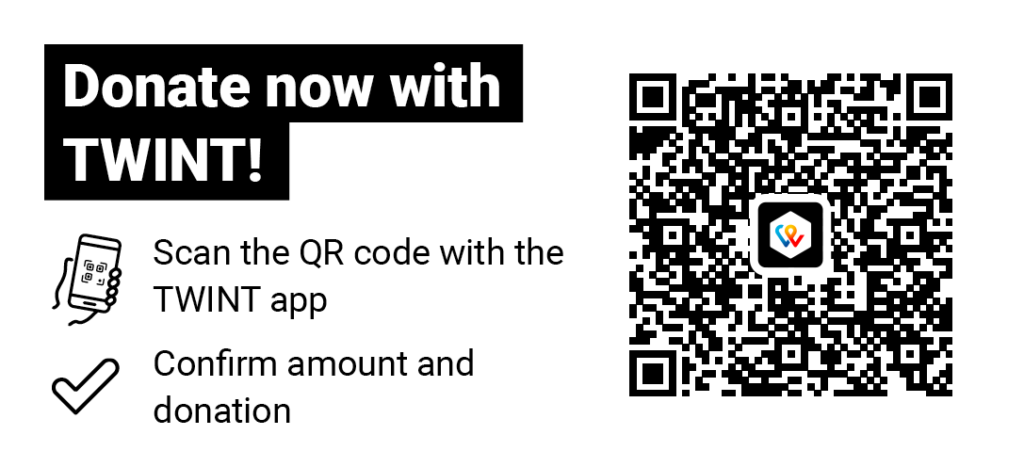
By clicking the button, you will be redirected to our secure RaiseNow donation platform, where you can complete your donation using TWINT.
When making a donation, please provide your contact information (name, address, email, or phone number), as well as a note if you would like your donation to be used for a specific purpose and if you would like a donation receipt.
Engineers Without Borders Switzerland is already recognized as a nonprofit organization by most Swiss cantons (ZH, BE, LU, SZ, OW, NW, GL, FR, BS, BL, SH, AI, AG, NE, GE) as a non-profit organization (registration with the remaining cantons is pending). As a rule, donations of CHF 100 or more (depending on the canton) are tax-deductible. We will issue a donation receipt upon receipt of your donation.